
1.7M
children
children
Over 1 in 5 pupils
Over 1.7 million pupils in English schools speak English as an Additional Language – 21.4% of the school population, and growing
DfE School Census 2024/25, published June 2025.
An AI-supported reading platform helping children with English as an Additional Language
transition from conversational fluency to independent academic reading
ReadTwo is a UK-incorporated company building bilingual reading tools for the 1.7 million pupils in British schools who speak English as an Additional Language. Our first pilots are launching September 2026.
One in five children in English schools speaks English as an Additional Language. Many sound fluent within two years but still struggle for years more with the academic reading their classmates do independently
Over 1.7 million pupils in English schools speak English as an Additional Language – 21.4% of the school population, and growing
Conversational English fluency typically develops in 1 to 2 years. Academic reading fluency takes 5 to 7 years or longer. The gap is invisible at the school gate and persistent in the classroom
Maths word problems, science texts, history sources. Independent academic reading is the bottleneck across the curriculum, not just in English lessons
ReadTwo’s design is anchored in The Bell Foundation’s Five Principles for Effective Teaching of EAL Learners, the UK’s leading evidence-informed framework. The principles were developed by Professor Constant Leung (King’s College London) and Emma Parsons, and are used by Ofsted, the Department for Education, and the Education Endowment Foundation.
The Five Principles guide effective EAL provision in primary and secondary schools, which is the age range ReadTwo’s pilots address.
We teach English through high-quality, culturally representative literature, with cognitively demanding but linguistically scaffolded tasks, assessed holistically across all four language modalities, in a way that treats every child’s home language as an asset and their family as a partner.
Side-by-side reading in English and the child’s home language treats bilingualism as cognitive infrastructure, not a barrier. Translanguaging is designed for and encouraged, not corrected away.
Bell Foundation Principle 1Children read curriculum-aligned fiction, not simplified substitutes. The Quiet AI Coach provides in-context language support that maintains the cognitive demand of the text, following Cummins’ “scaffold the language, not the thinking” principle.
Bell Foundation Principle 2Sessions are designed around reading real fiction. Vocabulary, idiom and cultural context are taught in the flow of the text, with explicit language objectives drawn from the book, never as standalone drills.
Bell Foundation Principle 3Pilot evaluation is being designed to capture reading, listening, speaking and comprehension separately, alongside tutor-led structured retelling, rather than reducing each child to a single composite reading age. The four-modality view follows the Bell Foundation EAL Assessment Framework.
Bell Foundation Principle 4Texts curated for cultural representation. Family-facing materials available asynchronously in the child’s home language. Validating the home language as an active cognitive asset is part and parcel of our approach, ensuring pupils build academic reading independence while maintaining deep cultural roots.
Bell Foundation Principle 5The Bell Foundation publishes the Five Principles publicly to guide schools and practitioners. ReadTwo cites them as the framework informing our design and is not endorsed by or affiliated with The Bell Foundation. See bell-foundation.org.uk.
Our first programme launches in September 2026. Across three complementary settings – an in-person primary cohort and an in-person secondary cohort in Greater London, and an online cohort delivered with a UK charity supporting displaced Ukrainian children – we will work with 196 Ukrainian-speaking pupils to validate the approach with the children who need it most.
The “Brave Readers” programme is delivered by ReadTwo at no cost to partner organisations or families. Our first language pair is English–Ukrainian, reflecting the founder’s lived experience and an immediate, acute need. Delivery begins in September 2026; the funding we are currently pursuing determines the depth of the programme – licensed contemporary titles alongside our own bilingual editions, dedicated devices for in-school cohorts, and validated reading assessment.
From Spring 2027, subject to pilot evidence and funding, we plan to add Polish, Romanian, Spanish and Cantonese – reflecting some of the largest and fastest-growing EAL communities in UK schools.
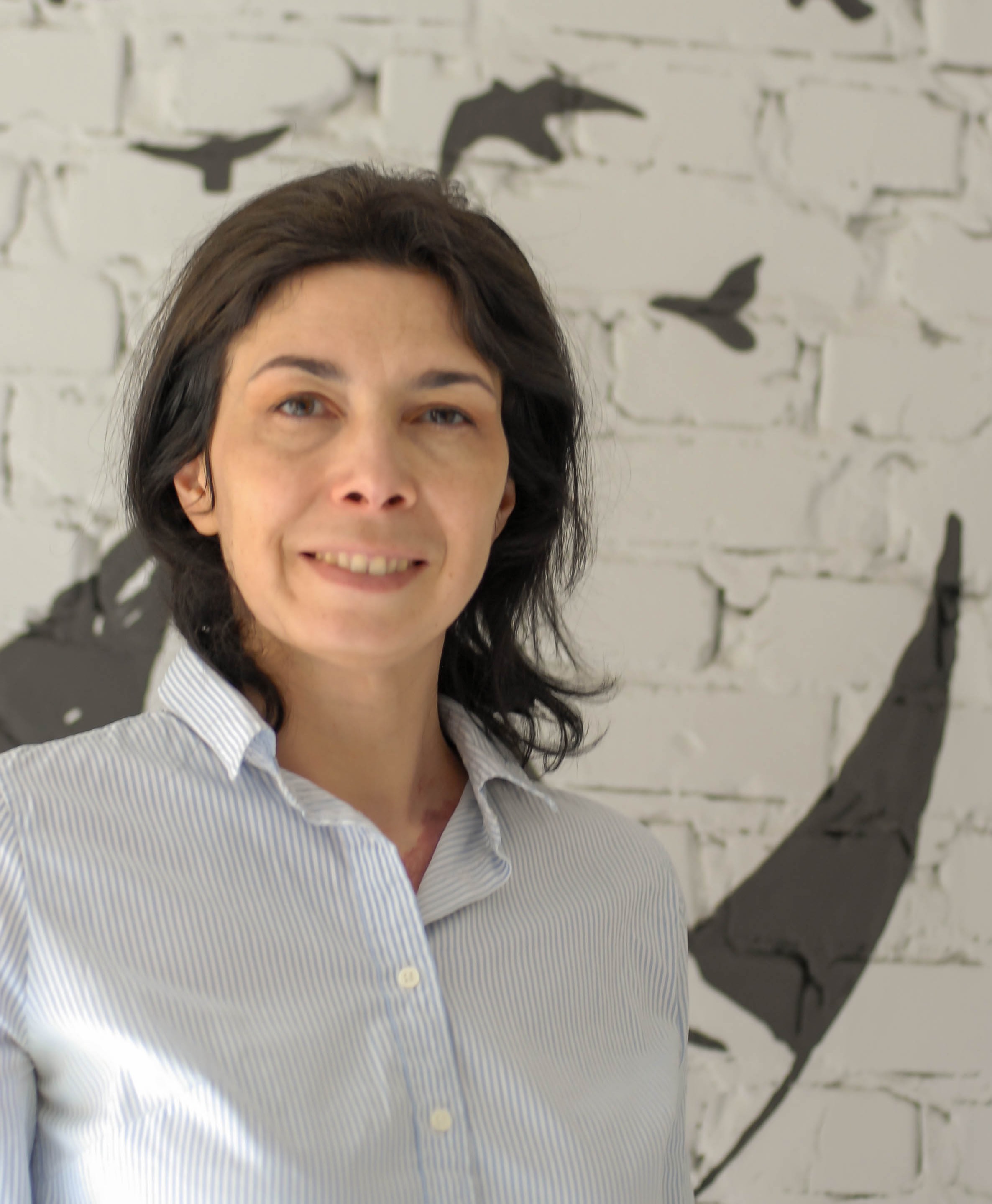
Hi, I’m Natalia Bulbuk, founder of ReadTwo. In 2022 I left Ukraine with my two young daughters during the war. As they began school in the UK, I watched them hit a barrier I now recognise as the academic plateau: confident in everyday English within months, but struggling for years with the academic texts their classmates were reading independently.
I have spent more than 20 years in data science and AI, most recently in senior data leadership roles. I built the first version of what became ReadTwo for my daughters. It worked.
What I built turned out to align closely with the evidence-informed approaches behind The Bell Foundation’s framework for EAL teaching – the UK’s leading body of practice in this field. That alignment gave me the confidence to take ReadTwo from a personal lifeline into a real product.
Our programmes, launching September 2026, will help validate the approach with the children who need it most, before any commercial rollout.
We are exploring paid school partnerships for Spring 2027 onwards. Register your interest to be among the first to hear when applications open, and to help shape the pilot.
Researchers, educators, foundations and mentors – we’d love to hear from you.
Email usFor Ukrainian-speaking and other EAL families: we know how quickly English can take over and a home language can fade. Our family product is in development, with beta access after the Brave Readers 2026 programme. Join the waitlist to hear first.
ReadTwo is committed to the safety and wellbeing of every child we work with. Pilot delivery involving children takes place through partner schools and organisations and under their safeguarding policies, and anyone working directly with children on a ReadTwo pilot is subject to an enhanced DBS check. Children never register or interact with ReadTwo directly – participation is always arranged through a school or a parent – and we collect only the minimum information necessary. For any safeguarding question, contact safeguarding@readtwo.app.